SEATTLE MASTERFIX PRECISION CRAFTSMANSHIP
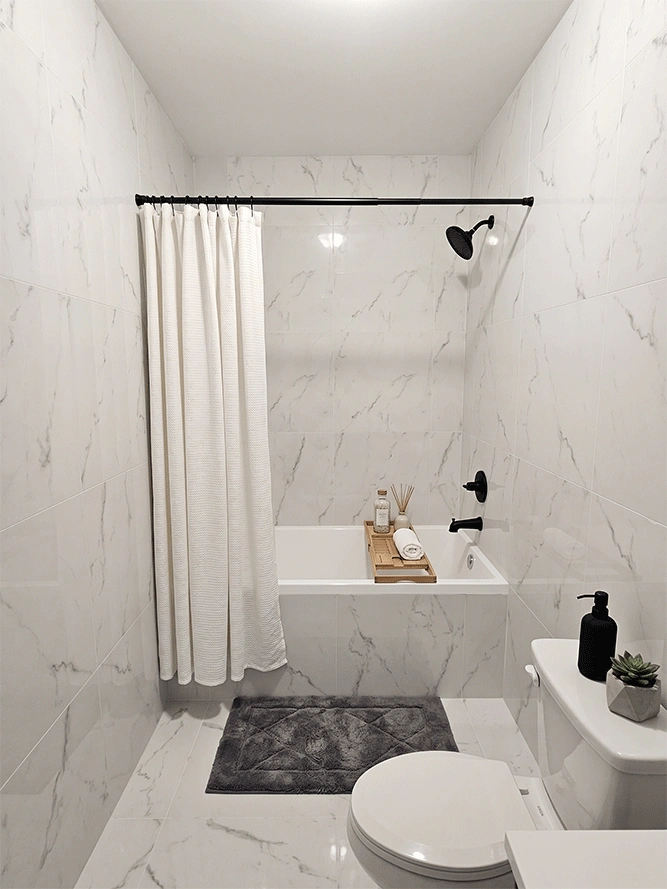
Tile work is unforgiving — every seam, lippage line, and grout joint is visible for the life of the installation. Below is our completed tile work, along with what we think you should know before starting a tile project.
Before You Renovate
In wet areas like showers and kitchens, a proper waterproof membrane behind the tile is what actually prevents leaks and subfloor damage — not the tile or grout on the surface.
Lippage (uneven tile edges) is almost always a subfloor problem, not a tile problem. We self-level and check flatness before setting a single tile.
We dry-lay and plan grout lines around focal points before setting anything, so you don't end up with awkward slivers at the edges of a room.
Epoxy vs. cementitious grout, and which surfaces need sealing, changes based on traffic and moisture exposure — we'll walk you through what's right for your space.
Porcelain, natural stone, and large-format tile each install differently and have different cure times. Rushing large-format tile is the most common cause of cracking.
Tile needs room to expand and contract. Proper transition strips and expansion joints prevent cracking months after installation — an easy detail to skip and regret.
How We Work
Subfloor leveling and membrane installation in any wet-area application.
We plan the full layout before adhesive touches the floor, avoiding awkward cuts.
Tiles are set with leveling systems to keep every edge flush and grout lines consistent.
Grout is applied, cleaned, and sealed based on the tile type and traffic exposure.
We check every line and joint with you before the job is considered complete.
Job Site Photography
Real photos from completed tile job sites. Tap any photo to view it full-size.
Tell us about your space and timeline, and we'll walk you through exactly what a tile project like yours involves.
Get a Scope Estimate